Cyber-Specialized Frontier Models: GPT-6 Cyber, Gemini 4 Carbon, and Trusted Access
GPT-6 Cyber and Gemini 4 Carbon: cyber-specialized frontier models, Daybreak and Fairwind trusted access, system-card capabilities—without attack recipes.

Cyber-specialized frontier models are shipping with explicit trusted-access programs. Capabilities belong in system cards; operational exploit recipes do not belong in buyer briefings.
Frontier labs are no longer treating cybersecurity as a single refusal category. They are shipping cyber-specialized model variants, publishing preparedness ratings, and gating the strongest permissions behind identity checks, organizational attestations, and monitoring. Two November 2026 reference points define the moment: OpenAI’s GPT‑6 Cyber (with a public system card and Daybreak Red access path) and Google’s Gemini 4 Carbon, announced as a pre-release frontier model for long-horizon engineering and cybersecurity defense with staged Fairwind access.
This article stays at the level of published capabilities and safeguards. It does not describe how to attack systems. For the wider question of who hosts inference and who inspects weights, see Open-Weight Frontier Models vs Closed APIs: The Sovereignty Trade-Off.
Readers looking for step-by-step offensive guidance will not find it here—and should not expect reputable vendors to publish it either. The useful artifacts are eligibility rules, monitoring promises, evaluation caveats, and the difference between a gated research SKU and a consumer chatbot.
Why “cyber-specialized” is a product category now
General-purpose models can triage tickets and suggest patches—and they also over-refuse legitimate defensive work. Specialized cyber variants aim to lower those refusals inside authorized scope while tightening alignment against out-of-scope actions and non-cyber harms. OpenAI’s GPT‑6 Cyber system card describes a cyber-specialized variant of GPT‑6 Astra with post-training aimed at authorized security work (vulnerability discovery, exploit development, and web pentesting in evaluation settings) and reduced cyber refusals, while preserving refusals outside cybersecurity.
That combination forces a new buyer conversation: not “is the model smart?” but “who is allowed to call it, under which monitoring, and what does the system card say about scope adherence?”
GPT‑6 Cyber: published capabilities (system-card level)
OpenAI introduced GPT‑6 Cyber on 5 November 2026 as a cybersecurity model trained to find and validate exploitable vulnerabilities while staying within researcher-set scope. Vendor-reported highlights from the announcement and Deployment Safety Hub system card include:
- Preparedness: Critical in Cybersecurity (same designation OpenAI assigns GPT‑6 Astra), High in Biological and Chemical, below High in AI Self-Improvement.
- Benchmark deltas OpenAI reports: ExploitGym intended-exploit success 48.5% for GPT‑6 Cyber versus 32.1% for GPT‑5.6 Cyber (about a 51% relative improvement in the launch post’s framing); RemoteExploitBench completion 95% for GPT‑6 Cyber in an initial evaluation where GPT‑6 Astra with Daybreak Blue refused 100% of those tasks.
- Scope alignment: On ExploitGym Honeypot, GPT‑6 Cyber avoided exploiting out-of-scope services in 99.93% of tests without its deployment safety prompt and 100% with that prompt (system card table: 0.07% honeypot exploitation without instructions, 0% with).
- Real-world defensive claims OpenAI attributes to partners and internal campaigns: examples include validated findings and proposed patches for Firefox (OpenAI cites 81 novel high-severity vulnerabilities classified by Mozilla) and large-scale Linux kernel exploit-development counts in OpenAI’s own research write-up—presented as authorized research outcomes, not as instructions.
Treat every percentage as vendor evaluation under stated settings. System cards warn that policies, graders, and datasets evolve; scores are for relative comparison inside the card, not universal league tables.
Safeguards and trusted access (Daybreak)
Access to GPT‑6 Cyber is restricted. OpenAI states it is initially available through the API and Codex to a select group of approved Daybreak Red customers, with progressive expansion planned, and that GPT‑5.6 Cyber is being made available to all Daybreak Red customers. Daybreak Blue remains the track for verified defenders with fewer unnecessary refusals on mainline models such as GPT‑6 Astra.
Safeguards summarized from the system card and launch post (non-operational):
- Identity verification, use restrictions, and organizational security expectations (SSO, MFA, managed devices, least privilege; IP allowlisting for Daybreak Red API by default).
- Recommendations for sandboxing, action review / Auto-Review, isolated environments, and human oversight on high-risk workflows.
- Cyber-specific misalignment monitoring aimed at distinguishing authorized testing from actions outside user authorization.
- Private Safety Processing (PSP) generally required for Zero Data Retention API customers: automated review of encrypted safety records retained in customer storage for 30 days without exposing prompts/responses to OpenAI personnel by default.
- Strengthened blocks on high-risk assistance involving industrial controls, essential services, and related catastrophic-harm categories; OpenAI reports partner evaluations with Dragos in controlled lab settings to refine those rates.
- Biological safety mode enabled for every GPT‑6 Cyber user, to avoid cyber training relaxing non-cyber safeguards.
- A Daybreak Red for Critical Infrastructure subgroup for approved critical-infrastructure defenders, alongside a broader Daybreak for Frontline Defenders subsidy program OpenAI describes at the $1 billion scale.
None of that is a license to point the model at production systems without authorization. It is a map of how OpenAI says it gates and monitors the SKU.
Gemini 4 Carbon: pre-release—cite only what Google published
Gemini 4 Carbon is not generally available. Google’s 28 October 2026 announcement and its October AI recap are explicit: Carbon is Google’s strongest model yet for long-horizon engineering and cybersecurity defense, but rollout is deliberate. Google says it is engaged in the U.S. government’s voluntary pre-release testing process, is making Carbon available first to a subset of cyber defenders, and will gradually phase access to additional trusted partners through the Fairwind Program while iterating guardrails before broader developer, business, and consumer surfaces.
Published capability claims from Google’s Carbon post (Google’s numbers; external cyber evals described as run without guardrails):
- SEC-bench Pro 88.2% (vulnerability finding), ExploitGym 54.8% (exploitation/validation), CWE-bench 71.0% (patching).
- Artificial Analysis Intelligence Index v5.0 rank #1 at 59 (Google’s citation).
- Internal claims: more than 2× success-rate uplift versus Argon at generating secure code; Chrome team reported more than 10× better performance than another lab’s large frontier model at generating high-quality patches (rival unnamed in Google’s post).
- Alignment-oriented internal metrics Google reports: Terminal-Bench 4.0 successful cheating reduced to 0.0% (cheat attempts 0.4%); high-severity misalignment alerts down almost 80% in live internal coding environments; unsupported claims cut about 2× versus Argon; overreach reduced 26% and under-service 29%; Gray Swan Indirect Prompt Injection attack success 0.0% (versus Argon’s 0.7% on that benchmark, per Google).
Introductory pricing Google states for launch: $2 per million input tokens and $10 per million output tokens (same introductory price as Argon), with cached input at 95% off; after the introductory period, $4 / $20.
Fairwind, as Google DeepMind describes the program, is a trusted-partner early-access path for high-priority defenders (governments, critical infrastructure, and similar), with governance terms such as phishing-resistant MFA, access limited to internal security teams, no redistribution/resale of access, and dual-use tasks restricted to authorized defensive and research purposes. Carbon’s October recap reiterates the same staged story: Argon broadly rolled out after early testing; Carbon remains in pre-release Fairwind/government testing.
Say it plainly for procurement: Carbon benchmarks and safety metrics above are Google-published, pre-general-availability statements. They are not a promise that every Cloud customer can call Carbon today under identical conditions.
Comparing access models—not attack surfaces
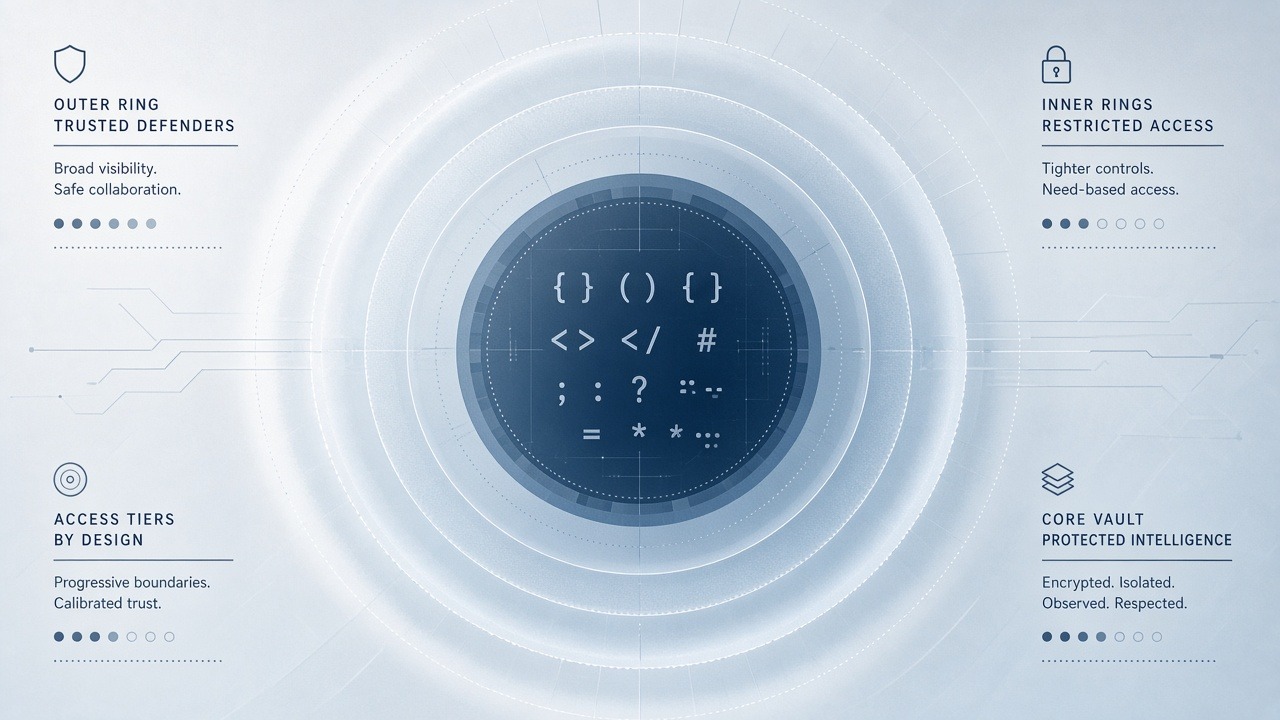
OpenAI and Google are converging on a pattern even while SKUs differ:
| Dimension | GPT‑6 Cyber (OpenAI published) | Gemini 4 Carbon (Google published) |
|---|---|---|
| GA status | Restricted Daybreak Red / Codex for approved customers | Pre-release; Fairwind + US gov voluntary testing |
| Stated focus | Authorized cyber work with reduced cyber refusals | Long-horizon engineering + cyber defense lifecycle |
| Signature gate | Daybreak eligibility, IP allowlisting, PSP for ZDR | Fairwind partner controls + staged expansion |
| Public artifact | Full Deployment Safety Hub system card | Announcement + safety narrative; broader GA pending |
Enterprises should not read “Critical cybersecurity” or “state-of-the-art on SEC-bench Pro” as permission to deploy either model on live estates without the same change-control they would demand for a human red team. The system card and Fairwind terms exist precisely because the labs treat these capabilities as dual-use.
Sovereignty still matters. Cyber-specialized closed APIs concentrate powerful tools in vendor-mediated environments with logging and revoke rights—attractive for audit, constraining for air-gapped response. Open-weight stacks reverse that trade-off. Hybrid programs often keep cyber-critical closed models for vetted blue/red teams while keeping general coding assistants closer to the developer laptop. That portfolio logic is the same sovereignty discussion as in Open-Weight Frontier Models vs Closed APIs, only with higher misuse stakes.
A sober program design usually splits three lanes. Lane 1 is everyday secure coding assistance on generally available models with standard enterprise controls. Lane 2 is verified-defender access (Daybreak Blue–style or Fairwind Argon-class tooling) for vulnerability triage and patch drafting with fewer unnecessary refusals. Lane 3 is the scarcest tier—GPT‑6 Cyber today, Carbon only for the pre-release cohort Google names—reserved for authorized research under written rules of engagement. Collapsing those lanes into a single shared API key is how organizations accidentally recreate the dual-use problem the labs are trying to price and gate.
Documentation discipline belongs in the same design. Keep the system card version, the date access was granted, the named approvers, and the monitored project IDs beside any finding your team later files with a maintainer. When a model helps produce evidence for a disclosure, the audit trail should show human authorization and scope the same way a classical red-team engagement would.
What buyers should demand in writing
- Access proof. Named tier (Daybreak Red, Fairwind, etc.), identity checks, and who inside your org is authorized.
- Scope policy. How the vendor defines authorized targets; how out-of-scope actions are blocked or monitored.
- Evaluation caveats. Whether cited cyber scores were measured with or without product guardrails (Google flags ungated external cyber evals for Carbon).
- Data handling. Retention defaults, ZDR/PSP equivalents, and whether security review can see plaintext prompts.
- Kill switch. Credential revocation, IP allowlist changes, and human oversight hooks for agentic runs.
-
Non-cyber safety. Confirmation that cyber permissiveness does not weaken biological or other high-risk refusals (OpenAI’s system card explicitly tests this for GPT‑6 Cyber).
-
Disclosure hygiene. If model-assisted research leads to maintainer reports, retain human sign-off, scope statements, and tool logs—treat the agent as a researcher under supervision, not as an anonymous scanner.
These demands are intentionally bureaucratic. Cyber-specialized frontier models compress weeks of analysis into hours; the paperwork is what keeps that speed from outrunning authorization.
Bottom line
GPT‑6 Cyber is a deployed-but-gated cyber-specialized model with a detailed public system card, Critical cybersecurity preparedness, and Daybreak Red trusted access. Gemini 4 Carbon is a pre-release Google frontier model with strong published cyber-defense benchmark claims and Fairwind/government-first access—not broad developer GA as of Google’s October 2026 notices. The responsible reading for AndBeyond.Tech readers is narrow: use the cards and access policies to decide whether your defenders qualify, what monitoring you inherit, and how these closed cyber SKUs fit a sovereignty portfolio. Do not treat launch blogs as runbooks.
Related reading
- Open-Weight Frontier Models vs Closed APIs: The Sovereignty Trade-Off
- Always-On Agents Arrive: Claude Duet, Muse Wonder, and Perplexity Teammates
- Computer-Use Agents Enter Production: What Actually Works in the Enterprise
References
- GPT‑6 Cyber: Advancing the frontier of aligned cybersecurity agents | OpenAI — 5 Nov 2026; capability and Daybreak access overview; partner impact claims.
- GPT‑6 Cyber System Card | OpenAI Deployment Safety Hub — 5 Nov 2026; preparedness ratings, alignment evals, safeguards, access requirements.
- Gemini 4 Carbon: our next frontier model | Google — 28 Oct 2026; pre-release Fairwind/gov testing; SEC-bench Pro / ExploitGym / CWE-bench figures; pricing.
- The latest AI news we announced in October 2026 | Google — 2 Nov 2026; Carbon pre-release framing alongside Argon GA.
- Fairwind Program | Google DeepMind — trusted-partner access governance for cyber-defense early access.
Images: original illustrations generated for AndBeyond.Tech; no logos or real people depicted.