Agility Goes Public: What the First Pure-Play Humanoid Listing Means for Physical AI
Agility Robotics lists on Nasdaq as AGLT: capital raised, Digit 5 order claims, what the first pure-play humanoid robot stock means for Physical AI.

For most of the last decade, humanoid robotics was visible on U.S. public markets only indirectly: through an automaker that builds them on the side, a chipmaker that sells the compute, or private rounds that disclose little. That changed on 5 November 2026. Agility Robotics began trading on the Nasdaq Stock Market under the ticker symbols AGLT (common stock) and AGLTW (warrants), after completing a business combination with special-purpose acquisition company Churchill Capital Corp XI the day before. In its own words, Agility became the first U.S. publicly listed humanoid company that is a pure play — focused on humanoids and physical AI, with active commercial deployments already running (Agility IR, 5 Nov 2026; Agility IR closing, 4 Nov 2026; SEC Form 8-K).
This article is not investment advice. It does not recommend buying or selling AGLT, and it does not treat any share-price move as a signal. What it does is unpack what Agility disclosed about capital, orders, customers and manufacturing — and why a humanoid robot stock that must file with the U.S. Securities and Exchange Commission changes how the rest of the industry will be judged.
What closed, and what began trading
On 4 November 2026, Churchill Capital Corp XI and Agility Robotics completed the business combination described in Churchill’s proxy statement/prospectus. Churchill’s previous tickers (including CCXI) ceased trading; the combined company, Agility Robotics, Inc., was set to list common stock and warrants as AGLT and AGLTW on 5 November 2026. The SEC Form 8-K filed around the closing confirms those ticker changes and the domestication and merger steps that made Agility the successor registrant (SEC Form 8-K; Agility IR closing, 4 Nov 2026).
The 5 November trading-day release restates the economics of the deal in company language: the business combination and related financings provided approximately $465 million in gross capital before transaction expenses. That figure, Agility says, includes proceeds from a private investment in public equity (PIPE) led by Foxconn and $100 million of equity funding received prior to closing. Agility states it intends to use the proceeds to fulfill customer orders, expand commercial deployments, scale Digit production and continue work on its robotics and physical AI platform (Agility IR, 5 Nov 2026).
Lock-up terms are also part of the disclosed structure. Agility’s closing release says all existing Agility shareholders rolled 100% of their equity into the combined company, and that shares held by existing Agility shareholders and by the Churchill sponsor are subject to a 180-day lock-up after closing, with possible early release tied to stock-price performance measures. Resale registration filings, the company notes, do not lift those lock-ups (Agility IR closing, 4 Nov 2026).
None of that is a valuation call. It is the plumbing of a SPAC combination that public-market readers need in order to interpret later filings.
Why “pure-play” matters more than the ticker itself
Calling Agility the first U.S. pure-play humanoid listing (via SPAC rather than a traditional IPO) is a category claim, not a quality claim. Tesla, Inc. is already public, and Optimus is a Tesla product line — but Tesla’s disclosures cover cars, energy storage, autonomy software and more, with Optimus as one program among many. Figure AI and Apptronik, two of the other Western names most often mentioned alongside Digit in industrial pilots, remain private companies as of this writing; they do not publish the same continuous disclosure pack a Nasdaq issuer must. Agility’s own releases lean on that distinction: a pure-play humanoid robotics company with “proven, active commercial deployments,” not a conglomerate segment and not a lab demo (Agility IR, 5 Nov 2026).
For Physical AI — the industry shorthand for models and robots that act in the physical world — a public pure-play changes the evidence bar. Quarterly reports, risk-factor language, revenue recognition and customer concentration will become as important as tote counts and highlight reels. Competitors that stay private can still raise capital; they will simply face a living benchmark that files 10-Qs.
The commercial base Agility says it brings to market
Agility’s trading-day release lists Digit deployments with GXO, Schaeffler and Toyota Motor Manufacturing Canada, and repeats a company operating metric of more than 65,000 hours of real-world operation. At GXO’s Georgia site, Agility says Digit has moved more than 100,000 totes, and that the partnership recently expanded to two additional U.S. logistics facilities with deployments expected in early 2027. The same release cites a commercial agreement with AGCO for a Digit pilot expected to begin in 2027, plus three additional enterprise manufacturing customers in paid programs (described as a major global automaker, a large automotive technology and components developer, and a leading global consumer-products manufacturer, without naming them). Agility also claims an active pipeline of more than 30 prospective customers across automotive, manufacturing, aerospace, logistics, consumer products and defense (Agility IR, 5 Nov 2026).
Those are Agility’s figures, restated from its IR materials. Hours and tote counts are useful; they still do not, by themselves, disclose contribution margin, intervention rates or how much of each site is still assisted by people. Public reporting will pressure the company to connect operating metrics to financial ones.
Digit 5 orders: a company claim, with conditions
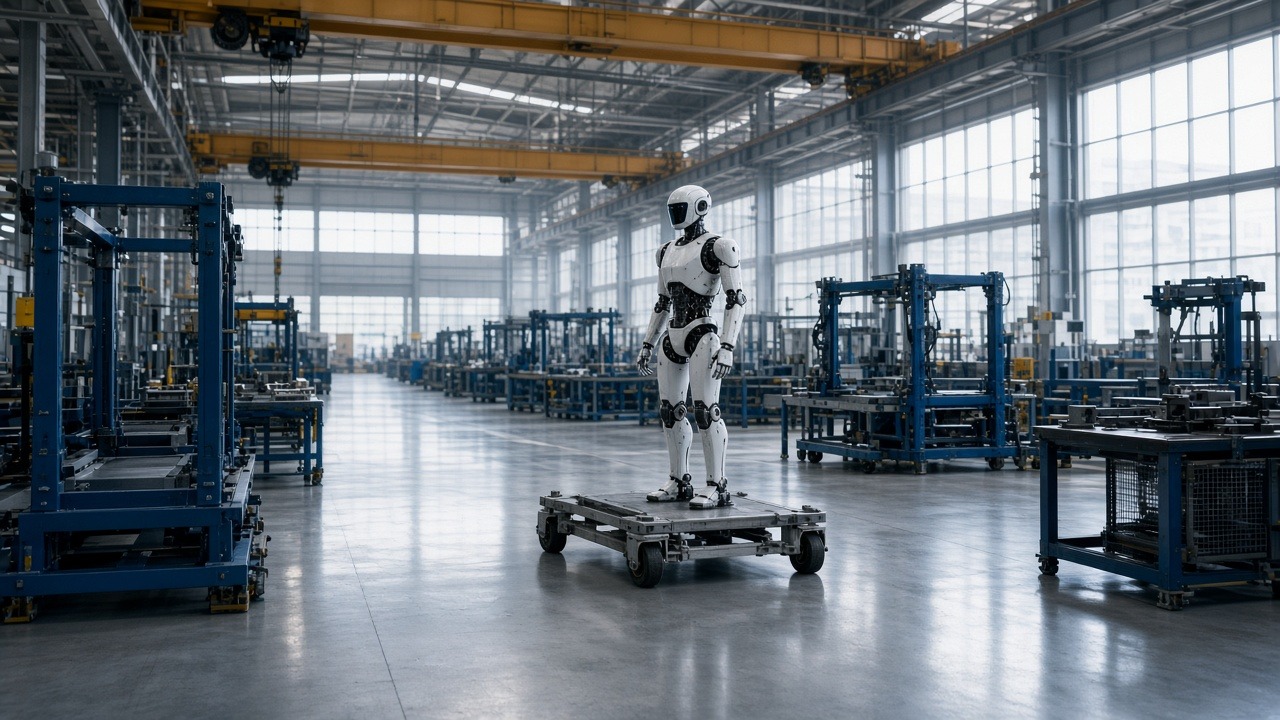
The headline commercial number in the listing materials is the Digit 5 backlog. Agility states it has secured more than $300 million in committed multi-year orders for Digit 5, its next-generation platform unveiled in September 2026. The same sentences that advertise the figure also qualify it: the orders are subject to contractual milestones, product features and specifications. Early customer access is expected in the first half of 2027, with general availability targeted for the end of 2027, according to Agility (Agility IR, 5 Nov 2026; Agility IR closing, 4 Nov 2026).
Treat the backlog as a company claim, not as booked revenue. Agility’s own forward-looking-statements section lists the risk that it may fail to satisfy the milestones and specifications that underlie those orders, and that pilots and paid programs may not convert into larger deployments. That caution is part of the primary source, not an outside critique.
On the product side, Agility says Digit 5 is designed for “cooperatively safe” work closer to people, with proprietary cycloidal actuators engineered for repetitive lifts of up to 50 pounds, interchangeable end effectors, and fleet software via Agility Arc. Partner mentions in the same release include plans to standardize Digit 5 onboard compute on NVIDIA IGX Thor and expand NVIDIA Halos safety integration; FORT Robotics for industrial safety systems; and Nyobolt battery technology described as enabling a nine-minute recharge and more than 20 hours of productive work in a 24-hour day — again, Agility’s design targets, not independently audited field results in the listing release (Agility IR, 5 Nov 2026).
Manufacturing capacity is a design figure, not a run-rate
Scale stories often blur “designed for” and “producing.” Agility describes RoboFab, a 70,000-square-foot manufacturing facility in Salem, Oregon, as designed for annual production capacity of up to 10,000 robots. It also cites a Fremont, California hardware and physical-AI site and a newly announced 50,000-square-foot Pittsburgh expansion for software, AI, deployment and customer support (Agility IR, 5 Nov 2026).
“Designed for” capacity is a planning number. Whether RoboFab approaches 10,000 units a year depends on demand conversion, supply chain and yield — topics future filings are better placed to test than a launch-day press release.
How rivals sit in the same frame — without blurring categories
A fair comparison keeps corporate structure visible.
Tesla. Tesla is a public company; Optimus is not a standalone humanoid robot stock. In its Q3 2026 communications covered by The Verge, Tesla described early Optimus production on a high-volume line in Fremont while still listing hands, safety, reliability, durability and AI as areas needing work, with outside deliveries discussed around the end of 2027 rather than as a present commercial fleet for third parties (The Verge). That is a different disclosure regime and a different product maturity story from Agility’s tote-moving deployments.
Figure AI and Apptronik. Both remain private. Public reporting on their industrial pilots (for example Figure’s BMW work or Apptronik’s Mercedes-Benz logistics pilots) has come through company blogs, customer statements and trade press rather than through Nasdaq continuous disclosure. Their capital raises can be large; they do not yet face the same quarterly rhythm Agility just joined.
Agility’s listing therefore does not prove Digit is the best robot. It proves that at least one humanoid vendor with named commercial customers is willing to live under U.S. public-company rules.
What to watch next
For operators evaluating humanoids, the listing is useful even if they never buy a share. Public filings tend to flush out unit economics, warranty reserves, concentration risk and the gap between backlog and revenue. For readers following Physical AI as a theme, three near-term checks matter more than debut-day narratives:
- Backlog conversion. How much of the “more than $300 million” Digit 5 claim, as Agility describes it, becomes recognized revenue once milestones and specifications are tested in 2027 access programs?
- Deployment density. Do GXO’s additional sites, the AGCO pilot and the unnamed paid manufacturing programs grow hours and tasks — or stall at demonstrations?
- Capital sufficiency. Agility’s risk language already flags historical net losses, limited operating history and the possibility that post-combination capital may not be enough. Future financing needs would not be surprising in robotics; they should be read in the filings, not inferred from ticker volatility.
CEO Peggy Johnson framed the listing as resources to accelerate robots that already do repetitive, physically demanding work in customer operations (Agility IR, 5 Nov 2026). That is a corporate ambition statement. The public market will now ask for evidence on a calendar.
Bottom line
The listing is now a matter of record: AGLT and AGLTW began trading on 5 November 2026 after a 4 November closing, with about $465 million gross capital before expenses as stated by Agility, and with Digit 5 multi-year orders of more than $300 million presented as committed but conditional company claims (Agility IR, 5 Nov 2026; SEC Form 8-K). For Physical AI, the strategic fact is simpler than any debut headline: the United States now has a pure-play publicly listed humanoid company whose commercial story will be stress-tested in SEC documents, not only in demo videos. That raises the information standard for everyone else — private peers and conglomerate programs included — without turning a press release into a buy or sell recommendation.
Related reading
- Humanoids on the Factory Floor: From Demo Videos to Full Shifts
- Consumer Humanoids: Timeline, Price Reality, and the Home Use Cases That Stick
- Humanoids on the Grid: Why Utilities Are Betting on Physical AI for Substations
References / Sources
- Agility Robotics IR — “Agility Becomes First U.S. Publicly Listed Pure-Play Humanoid Robotics Company, Begins Trading Today on Nasdaq as AGLT” (5 November 2026): https://investors.agilityrobotics.com/news-releases/news-release-details/agility-becomes-first-us-publicly-listed-pure-play-humanoid
- Agility Robotics IR — “Agility Robotics and Churchill Capital Corp XI Complete Business Combination” (4 November 2026): https://investors.agilityrobotics.com/news-releases/news-release-details/agility-robotics-and-churchill-capital-corp-xi-complete-business
- U.S. SEC — Churchill Capital Corp XI / Agility Form 8-K (business combination closing; AGLT/AGLTW listing): https://www.sec.gov/Archives/edgar/data/2074973/000121390026116898/ea0311204-8k_churchill11.htm
- The Verge — “Just because Tesla’s Optimus is in production doesn’t mean it’s actually ready”: https://www.theverge.com/tech/1016492/tesla-optimus-robots-production-musk-q3-earnings
Images: original illustrations generated for AndBeyond.Tech; no logos or real people depicted.