The Agent Harness Era: Why Multi-Model Orchestration Is Becoming the Real AI Platform
Microsoft Copilot harness and GitHub Universe 2026: why multi-model agent orchestration, sandboxes, and MCP skills are becoming the real AI platform layer.
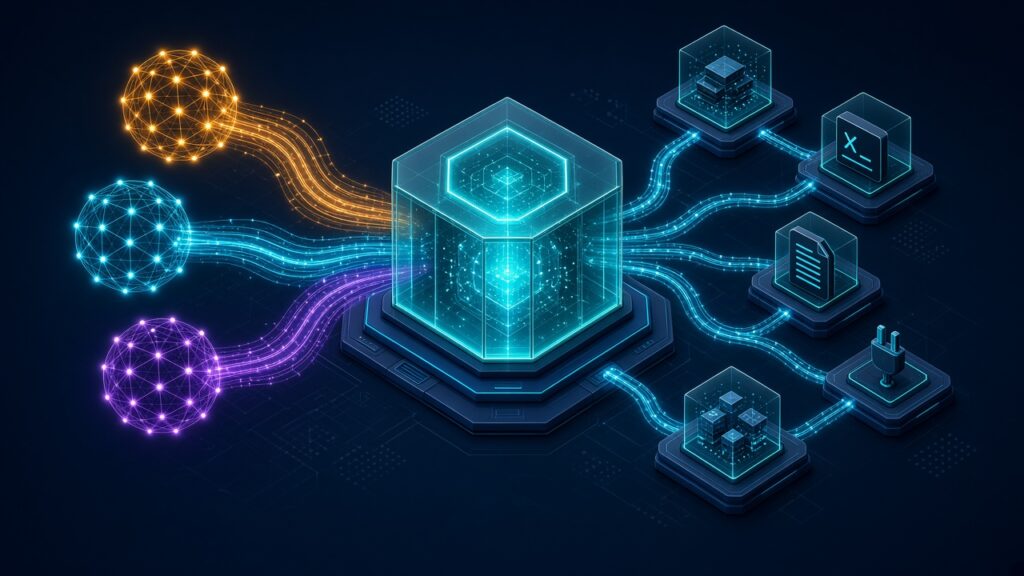
For most of the generative-AI boom, the public story was about models. Which lab had the best benchmark. Which parameter count sounded impressive. Which chat product felt sharpest this month. That story is not wrong, but it is incomplete. In late October 2026, Microsoft and GitHub made the quieter layer explicit: the thing that actually turns a model into useful agentic work is the harness — the runtime that wraps models with instructions, context, tools, sandboxes, routing, and governance.
On October 28, Microsoft announced that the Microsoft Copilot harness, born inside GitHub and already powering Copilot experiences across the company, would be available through Microsoft Foundry. The same day, GitHub Universe put multi-model orchestration on stage as Copilot Fusion and tied session continuity, cloud agents, and the VS Code Agents window back to that harness. The message was blunt: compete multi-model, and you need a great harness to finish real work.
This article stays on that platform layer — the agent loop, multi-model routing, sandboxes, MCP and skills, and the question of who controls the runtime — and how it sits beside the work-OS shift and the browser, IDE, and OS battlegrounds we mapped earlier.
What a harness actually is
Microsoft’s own definition is usefully plain. If the model supplies the intelligence, the harness is everything around the model: the orchestration layer that gives an agent the right instructions, context, execution environment, and controls to accomplish meaningful work. A harness worth shipping, the company adds, supports open standards such as MCP and agent skills, as well as agent plugins.
That framing matters because it relocates the product. A frontier model is an ingredient. A chat box is a surface. A harness is the factory floor: it decides how a task is broken up, which model sees which slice, which tools may be called, where code runs, how failures are retried, how long a session lives, and what an enterprise can audit afterward.
It also explains why building one is hard. Models churn. Tool ecosystems churn. Latency, token cost, and quality trade off differently by workload. Maintaining a router and an evaluation stack across vendors is painful if every product team invents its own. Microsoft’s bet is that the same harness GitHub engineered for demanding developers can be productized for everyone else through Foundry — SDK download or cloud-managed — so customers bring instructions, skills, tools, and model choice while Microsoft runs the agent loop and sandbox with governance and optimization built in.
The October 28 unlock: Foundry + Universe
Microsoft Foundry and a company-wide Copilot runtime
In the Official Microsoft Blog post introducing the harness, Tina Schuchman, CVP of Foundry, and Vladimir Fedorov, CTO of GitHub, describe a runtime already adopted company-wide. It powers Copilot Code, Copilot Studio, the GitHub Copilot app, the CLI, VS Code, and more. Making it available in Foundry is presented as giving developers and enterprises a fully managed way to build agents that reason, use tools, and complete complex, long-running tasks — without switching harness every time they switch models.
Several technical claims are worth anchoring because they define the platform story:
- Multi-model by design. The harness is built to perform across model families, with more than 20 frontier models plus bring-your-own-key, so work can be routed to the right model for the job rather than forcing one default everywhere.
- Rust runtime. Microsoft says it recently ported the harness runtime to Rust, with reductions in session overhead and time-to-first token and “industry-leading performance” language attached to that rewrite.
- Open and interoperable posture. Platforms remain open enough that customers can still bring other harnesses and frameworks; the pitch is convenience and shared improvement, not a hard lock that forbids alternatives.
- Compounding improvements. Improve the harness once, and every surface that runs on it benefits — a classic platform flywheel argument.
GitHub Universe: Fusion, sessions, and the software delivery system
GitHub’s Universe keynote framing, from Jay Parikh, EVP of CoreAI at Microsoft, treats GitHub as an end-to-end software delivery system for developers and their agents. Developers set direction and stay accountable; agents implement and verify; completed work — not more code for its own sake — is the output that matters.
Inside that vision, Copilot Fusion is the multi-model orchestration headline. Different tasks need different models; developers should not have to manage every model choice to get the right result at the right price. Fusion evaluates what a task needs across reasoning, code generation, debugging, and tool use, then chooses how to execute across one or more models. GitHub cites the Artificial Analysis Coding Agent Index: Fusion Max scored within two points of Opus 5.5 Max at half the cost and 40% less time per task.
Around Fusion sit products that only make sense if a shared harness exists underneath:
- Copilot projects run agent work across multiple repositories in fully managed, parallel sessions, with one place to track progress and direct next steps.
- Session continuity lets the same cloud agent session move across the GitHub Copilot app, VS Code, the CLI, and the web — start on a phone at standup, steer from the desktop, check from github.com — while the agent keeps working in the cloud.
- Copilot automations create AI-powered workflows in a repository, triggered manually, by event, or on a schedule, and can learn from outcomes to propose improvements for human approval.
- Copilot code review Max targets deeper review when a change needs it; GitHub says it posted the highest F1 score on ReviewBench for high-severity issues, with Lite and Balanced kept for everyday speed.
- Packaging. Starting that day, GitHub Enterprise customers can use Copilot features without a separate Copilot subscription and pay for the AI credits they use, with self-serve said to be coming soon.
The VS Code changelog published the same day makes the harness concrete for developers: the Copilot harness, built on the Microsoft Copilot SDK, is now the default for new sessions in both the editor and the Agents window. Cloud sessions can start from VS Code and continue in the Copilot app, Mobile, github.com, or Copilot CLI; Slack or Teams DMs can hand into the same clients. An Agent Host isolates sessions from individual windows so work continues after a folder closes. Experimental computer use can interact with desktop apps after per-application approval. An open Agent Host Protocol (AHP) lets third-party clients stay in sync with live sessions. A Customization Marketplace (preview) gathers skills, MCP servers, and plugins. Copilot connectors (preview) bring context from services such as Slack, Notion, and Microsoft Learn without installing a local MCP server.
Taken together, October 28 was less a feature dump than a declaration that the runtime is the product.
Anatomy of the platform layer
The agent loop
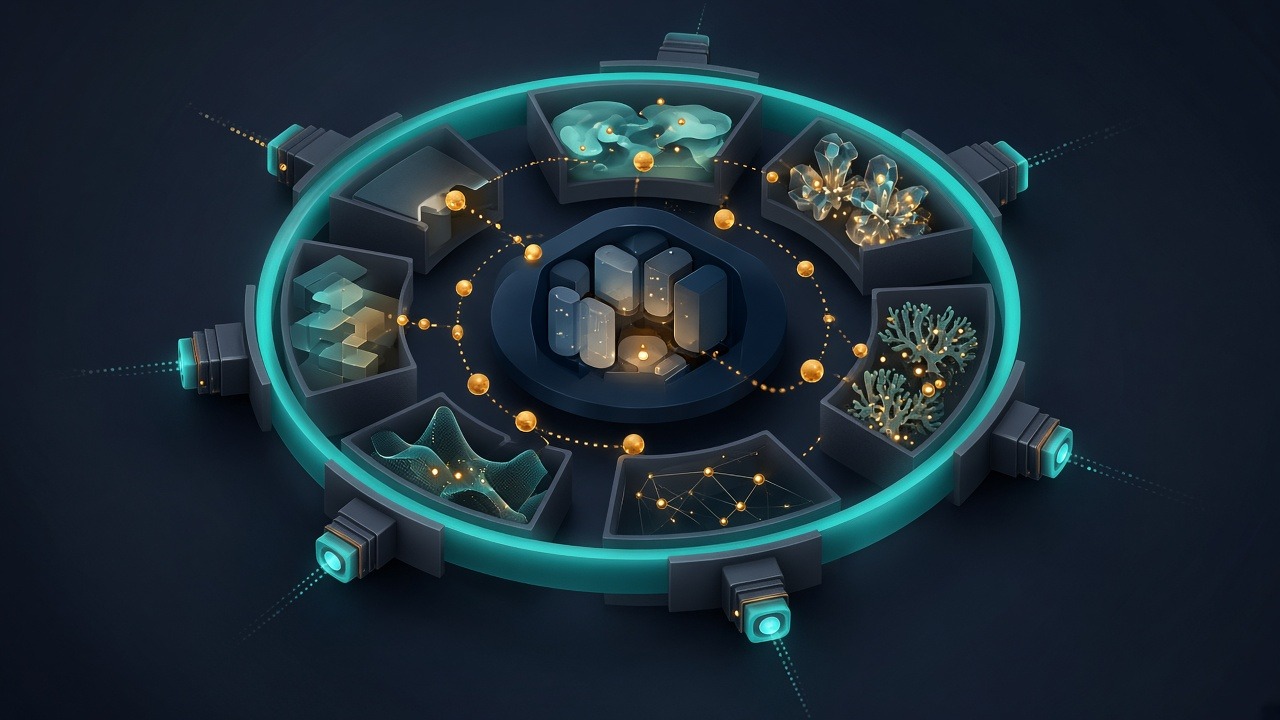
Every serious agent system converges on a loop: gather context, plan or choose a next step, call tools or write artifacts, observe results, and either continue or stop for a human. The harness owns that loop. When Microsoft says it “runs the agent loop and sandbox,” it is claiming ownership of the stateful machine that keeps a long-running task coherent across model calls, tool failures, and surface switches.
That is why session continuity is a harness feature rather than a UI nicety. If the loop lives in the cloud under a managed runtime, closing a laptop should not kill the work. If the loop lives only in a local editor process, it will.
Multi-model routing
Routing is the economic and quality heart of the harness era. A single model that is excellent at deep reasoning may be too slow or expensive for routine edits; a fast code model may be weak at planning. Fusion’s public claim — near-frontier quality at half the cost and substantially less time on a published coding-agent index — is exactly the pitch buyers want to hear: orchestration as a cost and latency optimizer, not only as a quality trick.
Microsoft’s Foundry framing goes further: lean on the vendor to eval new models and route intelligently, instead of rebuilding that science team in every enterprise. Whether customers trust that black box will be one of the defining procurement questions of 2027.
Sandboxes and permission to act
Agents become valuable when they can act: edit files, run tests, click desktop controls, update tickets. They become dangerous for the same reason. Sandboxes, approval gates, and policy controls are therefore not side features; they are the difference between a demo and a deployable platform. The VS Code computer-use experiment is telling: each application requires approval, organizations can disable the feature by policy, and the capability is labeled experimental. That is the harness doing product work — exposing power while keeping the blast radius configurable.
MCP, skills, and the open edge of a closed runtime
The Model Context Protocol positions itself as a USB-C port for AI applications: a standard way to connect assistants to data, tools, and workflows. Agent Skills, specified at agentskills.io, package reusable workflows as directories with a required SKILL.md (name and description in YAML frontmatter, plus Markdown instructions) and optional scripts, references, and assets, loaded with progressive disclosure. The official MCP Skills extension (io.modelcontextprotocol/skills, SEP-2640 Final) binds that format to MCP resources via skills/list, skills/get, and resources/read, with integrity checks on manifests and digests.
Microsoft’s harness post explicitly names MCP and agent skills as standards a serious harness should support. GitHub’s marketplace and connectors show the commercial expression: discovery and one-click context, still governed by enterprise policy. The strategic tension is clear. Open protocols make tools and skills portable; a managed harness makes the loop sticky. Portability at the edges and gravity at the runtime is the classic platform pattern.
Who controls the runtime?
Control of the harness decides more than latency numbers. It decides:
- Which models are first-class. A dropdown of 20-plus models sounds open; the router’s defaults and eval suite decide what most tasks actually use.
- Where memory and session state live. Continuity across phone, IDE, CLI, and web is a retention loop as much as a convenience feature.
- Which tools are easy. Marketplaces, connectors, and blessed MCP servers shape what agents can do on day one.
- What security looks like. Sandbox defaults, computer-use policy, plugin allowlists, and audit logs sit in the harness, not in the model weights.
- Who captures the margin. Credit-based packaging for GitHub Enterprise Copilot features pushes the commercial center of gravity toward metered agent work running on someone else’s loop.
This is why the harness era connects directly to our earlier maps. In From Chatbots to Work OS, the assistant becomes the place work starts and ends; connectors and write-capable MCP turn chat into a controller. In Browser, IDE, and OS: The Three Battlegrounds for AI Interfaces, the IDE already showed value accruing to review, governance, and the system of record. The harness is the missing middle: the runtime that lets any surface — work OS, IDE, or OS agent host — run multi-model agents without reinventing orchestration.
What to watch next
A few practical tests will show whether the harness truly becomes the platform:
- Eval transparency. Fusion’s Artificial Analysis citation is a start; enterprises will ask for task-level routing explainability and the right to override the router.
- Escape hatches. Microsoft’s line that you can bring another harness only matters if export of skills, tool configs, and session semantics is real.
- Cross-vendor skills. If Agent Skills over MCP become as boring as containers, competition shifts to reliability and price.
- Non-coding workloads. Coding fit first because diffs are reviewable; Foundry’s broader agentic pitch still needs boring enterprise workflows completed safely at scale.
- Infrastructure gravity. The 2026 infrastructure additions GitHub reports — 4 million CPU cores, 160 PB of high-speed storage, 50 Tb/s of network capacity, plus a multi-region Azure migration — remind buyers that agent platforms are also capital platforms.
The model is not the product
Frontier models will keep leaping. That is why tying your company to a single model as the platform is a fragile strategy. The durable layer is the one that can swap models, keep the loop running, isolate side effects, speak MCP and skills, and improve every attached surface when the runtime gets better.
October 28 did not invent that idea. It industrialised it: GitHub’s battle-tested multi-model harness, standardised across Copilot, opened through Foundry, and wrapped in products that assume agents as first-class workers. In the agent harness era, the real AI platform is not the chat window and not the weights. It is the runtime that decides how intelligence is scheduled, constrained, and paid for.
Related reading
- From Chatbots to Work OS
- Browser, IDE, and OS: The Three Battlegrounds for AI Interfaces
- Always-On Agents Arrive: Claude Duet, Muse Wonder, and Perplexity Teammates
References / Sources
- Microsoft Blog – Introducing the Microsoft Copilot harness (Oct 28, 2026): https://blogs.microsoft.com/blog/2026/10/28/introducing-the-microsoft-copilot-harness-unlocking-the-potential-of-truly-multi-model-agentic-work/
- GitHub Blog – GitHub Universe 2026: Evolving every layer of the stack (Oct 28, 2026): https://github.blog/news-insights/company-news/github-universe-2026-evolving-every-layer-of-the-stack/
- GitHub Changelog – GitHub Copilot in VS Code, Universe releases (Oct 28, 2026): https://github.blog/changelog/2026-10-28-github-copilot-in-vs-code-universe-releases/
- Model Context Protocol – What is MCP?: https://modelcontextprotocol.io/
- Model Context Protocol – Skills extension overview (SEP-2640): https://modelcontextprotocol.io/extensions/skills/overview
- Agent Skills – Specification: https://agentskills.io/specification
- AndBeyond.Tech – From Chatbots to Work OS (internal): /chatbots-to-work-os/
- AndBeyond.Tech – Browser, IDE, and OS: The Three Battlegrounds for AI Interfaces (internal): /three-battlegrounds-ai-interfaces/
Images: original illustrations generated for AndBeyond.Tech; no logos or real people depicted.